
How Personal Trainers Keep Your Motivation Strong
How Personal Trainers Keep Your Motivation Strong
Personal trainers play a pivotal role in sustaining motivation for people working to improve their fitness. They use practical, evidence-based strategies that help clients stay committed and create a supportive, accountable environment. Below, we outline how trainers use these tools to help especially busy adults over 40 overcome common barriers and keep moving toward long-term results.
Research supports the idea that targeted motivational coaching raises intrinsic motivation among adult exercise participants.
Motivational Coaching Boosts Intrinsic Motivation in Adult Fitness
This study measured intrinsic motivation after applying motivational coaching strategies within a semester-long, personalized adult fitness program. Sixty adults (40 female, 20 male; age = 48 ± 15 yrs) participated as clients in an undergraduate exercise-training program at Taylor University. In addition to individualized exercise plans, student trainers used a motivational coaching guide designed to increase intrinsic motivation.
The study found that motivational coaching improves intrinsic motivation in adult fitness program participants.
Motivational coaching improves intrinsic motivation in adult fitness program participants, 2020
Proven Techniques for Workout Consistency and Accountability
Trainers rely on a few core techniques to keep clients consistent and accountable. These approaches create structure, reduce decision fatigue, and make it easier to stick with a plan over time.
Accountability Partners: Trainers act as reliable accountability partners — offering encouragement, setting expectations, and checking in so clients are more likely to show up and follow through.
Regular Check-Ins: Frequent progress reviews help trainers adjust programs and keep clients focused. Regular contact maintains momentum and highlights small wins along the way.
Building Predictable Habits: Trainers help clients design repeatable routines and realistic schedules, turning workouts into dependable habits rather than occasional bursts of effort.
These methods boost both adherence and enjoyment, making it simpler for clients to stay engaged with their fitness over months and years.
Additional research shows that combining behavioral tools with psychological strategies effectively increases exercise adherence, reflecting how extrinsic supports lead into intrinsic motivation over time.
Personal Training: Behavioral & Psychological Techniques for Exercise Adherence
In this intervention, only the experimental group received behavioral feedback plus a free-access gym pass with personal training to support their exercise adherence. Results indicate that blending behavioral and psychological techniques is an efficient way to raise activity levels. The study also found that extrinsic motivation tends to drive early behavior change, while intrinsic motivation is key for long-term maintenance.
Exercise motivation in university community members: A behavioural intervention, J Cruz, 2007
Motivational Techniques That Build Commitment
Trainers tailor motivational strategies to each client — choosing methods that match goals, interests, and daily life. Those individual touches make commitment more sustainable.
Setting Realistic Milestones: Trainers break big goals into clear, achievable milestones so clients see steady progress. Celebrating small wins keeps momentum strong.
Tailored Training Programs: Programs that reflect a client's abilities and preferences are easier to maintain. When workouts feel relevant and enjoyable, people stick with them.
Personalized approaches turn intention into consistent action by making progress visible and rewarding.
Coaching Psychology for Adults Over 40
Applying coaching psychology helps trainers address the physical and mental hurdles older adults often face. Awareness of these factors leads to safer, more effective programs and better long-term engagement.
Expert Guidance: Trainers bring expertise that reduces uncertainty about exercise, lowers injury risk, and builds confidence — all crucial for older adults returning to or advancing their fitness.
Focus on Movement Quality: Emphasizing safe, efficient movement over volume helps clients feel competent and notice meaningful improvements, which fuels ongoing motivation.
Using psychological insights alongside technical coaching makes programs both safer and more motivating for adults over 40.
Accountability Methods to Increase Consistency
Accountability is a practical lever trainers use to keep clients consistent. The right tools make progress measurable and social supports more available.
Progress Journals: Tracking workouts, weights, and notes helps clients see progress and identify patterns — a simple but powerful motivator.
Community Support: Trainers often build small communities where members encourage each other, share tips, and celebrate milestones, which boosts commitment and enjoyment.
These accountability practices make it easier for clients to maintain regular exercise and recognize real improvement.
Benefits of Semi-Private Coaching for Adults Over 40
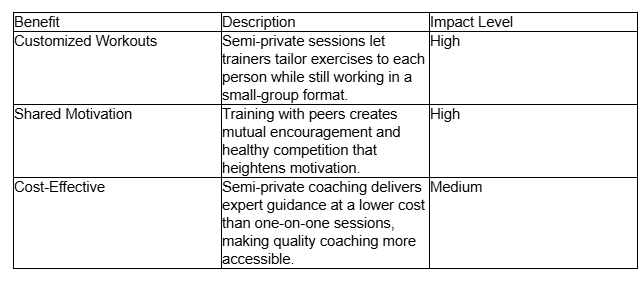
These benefits show how semi-private coaching supports adults over 40 with personalized attention plus the social lift of a small group.
Role of Community Support in Fitness Motivation
Community is a powerful driver of consistency. Trainers who cultivate connection help clients stay engaged and enjoy the process more.
Sense of Belonging: Being part of a group gives clients connection and purpose, which strengthens motivation and persistence.
Shared Experiences: Sharing challenges and wins with others creates accountability and makes workouts feel less like a chore and more like a shared journey.
When community is part of a program, people are more likely to keep showing up and keep improving.
The Impact of Personalized Coaching
Personalized coaching is the backbone of lasting change. When trainers design programs around a person's goals and life, results follow more consistently.
Tailored Programs: Programs that match individual goals, limitations, and preferences increase relevance and staying power.
Expert Coaching: Ongoing guidance helps clients navigate setbacks, progress safely, and stay focused on what matters most.
Personalized coaching empowers clients to own their fitness and build habits that last.
Success Stories Demonstrating Effectiveness
Stories from real clients make the benefits of personal training tangible and relatable. Hearing how others improved often sparks the confidence to start.
General Outcomes for Participants: Many clients report better strength, more energy, and improved overall wellbeing after consistent training.
Improved Strength and Energy: Clients commonly experience meaningful gains in strength and stamina that translate into better daily function and quality of life.
These examples highlight how consistent coaching and commitment lead to measurable, life-enhancing changes.
To learn how a personal trainer can help you meet your goals, visit Go Catalyst Fitness services.
